

+34 620 10 75 37info@nanbiosis.com

News

nanbiosis news

NANBIOSIS lecturers in B-Debate Imaging for Life. From Molecules to Diagnostics and Therapy

Last November took place in CosmoCaixa, Barcelona, the B-Debate Days Imaging for Life. Molecules from Diagnostics and Therapy.

The event, organized by B·Debate (an initiative of Biocat and “la Caixa” Foundation), IBB and LJS, was focussed on Biomolecular Imaging, with emphasis on molecular, cellular, tissular and small animal research, as well as biomedical applications, including noninvasive diagnostics, image guided surgery, multimodal imaging and theranostics.

Scientists of NANBIOIS Unit 20 and 25 were invited to participate as guest lecturers:

-Simó Schwartz, Scientific Director of Unit 20: New bioluminescent models to target cancer stem cells with nanomedicine.

-Ana Paula Candiota, Scientific Coordinator of Unit 25: Unravelling therapy response in preclinical glioblastoma using MRSI-based molecular imaging and source analysis.

As Professor Candiota explained “Characterization of Glioblastoma (GB) response to treatment is a key factor for improving patient survival and prognosis. Magnetic Resonance Imaging and Spectroscopic Imaging (MRI/MRSI) provide morphologic and metabolic profiles of GB but usually fail to produce unequivocal surrogate biomarkers of response. Ideally, we would like to provide clinicians with early therapy response follow-up and an improved time frame for changing or adapting therapy schemes”. Her talk focussed in the capability of advanced pattern recognition techniques, such as semi-supervised signal source extraction, to produce nosological images with robust recognition of response to temozolomide (TMZ) in preclinical GB (GL261 tumour-bearing in immunocompetent C57BL/6 mice) through the information contained in MRSI grids. These techniques have a clear translational potential and could improve future patient management and care. The acquisition of mice MRSI data used for pattern recognition strategies development and evaluation was performed in the Biospec 7T scanner from U25.

NANBIOSIS lecturers in B-Debate Imaging for Life. From Molecules to Diagnostics and Therapy
Read More

Extraordinary doctoral award

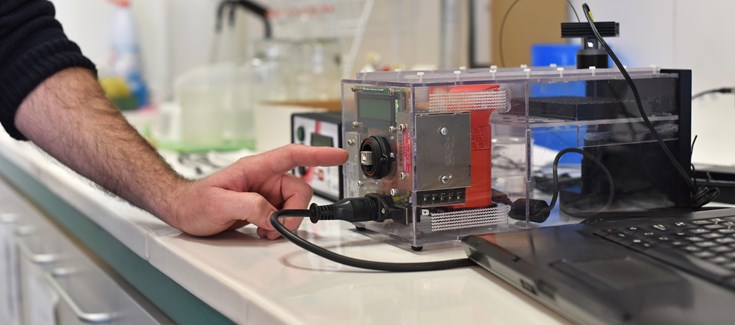
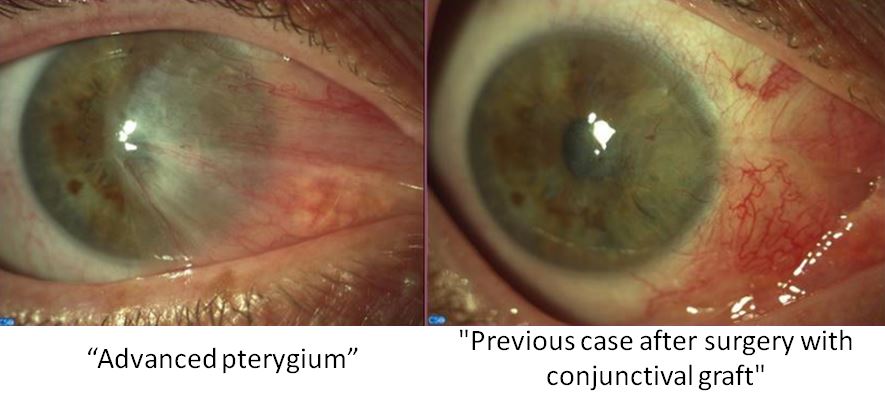
Anton Guimerà Brunet, member of the GBIO group that coordinates Unit 8 of NANBIOSIS, has obtained the extraordinary doctoral award from the Universitat Autònoma de Barcelona for his thesis “Novel methods and tools for corneal barrier function assessment through non-invasive impedance measurements”. This thesis was directed by Rosa Villa, Scientific Director of Unit 8 of NANBIOSIS.

The thesis covers aspects of basic research as applied, reaching the transference to the biomedical industrial sector and solving a need in the ophthalmological diagnosis to be able to quantify the degree of corneal permeability. This innovation also includes the development of a flexible microsystem made with microelectronic manufacturing techniques.

Extraordinary doctoral award to Anton Guimerà Brunet
Read More

Laura Lechuga received the Physics, Innovation and Technology Prize

On December 14th, the Physics Awards ceremony was held at the BBVA Foundation’s headquarters, organized by the Spanish Royal Society of Physics (RSEF) and the BBVA Foundation, that each year select the most relevant achievements of Spanish physics. On this occasion the achievements of nanoscience have been recognized and it has been highlighted the power of physics to expand the territory of the known universe and the role of scientists as a core element of social progress.

Professor Laura Lechuga, Scientific Director of Unit 4 of NANBIOSIS received the Physics, Innovation and Technology Prize was the only woman awarded.

Lechuga is a pioneer in Spain in the development of biosensors, devices that integrate in very little volume the analytical capacity of a laboratory, so they have the theoretical potential to revolutionize many technological areas that have a direct impact on society, from medical diagnosis to control of contaminants in the environment. The award winner works on two prototypes of nanophotonic biosensors to detect colon cancer and tuberculosis: “The future of immediate diagnosis goes through such devices, low cost and very high sensitivity, installed in mobile phones, which could be easily used also in regions in development” says professor Lechuga.

Laura Lechuga received the Physics, Innovation and Technology Prize
Read More

Biomedical materials that repel bacteria

The magazine Viceversa dedicates a special article to María Luisa González, Professor of Applied Physics at the University of Extremadura and Scientific Director of Unit 16 of NANBIOSIS: Surface Characterization and Calorimetry Unit.

One of her latest projects, PHYTECH, has developed a new surface for bone implants containing phytate, a natural product found in plant seeds that favours the regeneration of bone tissue and reduces the risk of infections in implants. Now, her research group is about to start a new European project with implant manufacturers in Austria and Lithuania, whose goal is to obtain a crystalline coating for titanium prostheses that favours cell adhesion and prevents or reduces bacterial infections.

The research trajectory of Professor González has a clear vocation towards the transfer of results to society. Her driving force in research is to improve the well-being of patients, improve the quality of materials to reduce infection problems after prosthetic and implant surgery, and also help to reduce the cost of healthcare.

Her challenge for the next five years is to know better the electrical characteristics of surfaces and how its roughness affect, at nanometer level, to prevent bacteria from adhering to them, without harming human cells.

Biomedical materials that repel bacteria
Read More

NANBIOSIS in three projects funded by CaixaIMPULSE

La Caixa has just presented the twenty projects selected by CaixaImpulse in a call with more than 70 proposals from different research centres, hospitals and universities. CaixaImpulse is an initiative unique in Spain that aims to boost research in biotechnology and life sciences to develop projects that generate value in society.

Among the selected projects there are two coordinated by NANBIOSIS researchers: Pseudomonas aeruginosa diagnosis led by Miriam Corredor Sánchez (Unit 2 of NANBIOSIS) and ISCHEMSURG, led by Monica Mir (Unit 7 of NANBIOSIS). In addition, the project ExoLiver, in which participates Rosa Villa and the research group coordinating Unit 8 of NANBIOSIS, has been also granted.

NANBIOSIS in three projects funded by CaixaIMPULSE.
Read More

Best oral communication at the National Congress of Young Researchers in Biomedicine

María Virumbrales, PhD candidate in the research group coordinating of Unit 13 of NANBIOSIS, has been awarded the Prize to the Best Oral Presentation in the I National Congress for Young Researchers in Biomedicine, which took place in Valencia, Spain, on the 28th-29th of November, 2016. The title of the communication was: “Tubeless microfluidic device to mimic tumor microenvironment and monitor cancer-endothelium interactions”.

The talk described an in vitro 3D model closely resembling biological tissues and blood vessels, established within a biocompatible material. This model is currently being used to recreate breast tumor microenvironment and evaluate drug efficiency within. 

Best oral communication at the National Congress of Young Researchers in Biomedicine
Read More

Lipid-based Nanovesicles for Nanomedicine

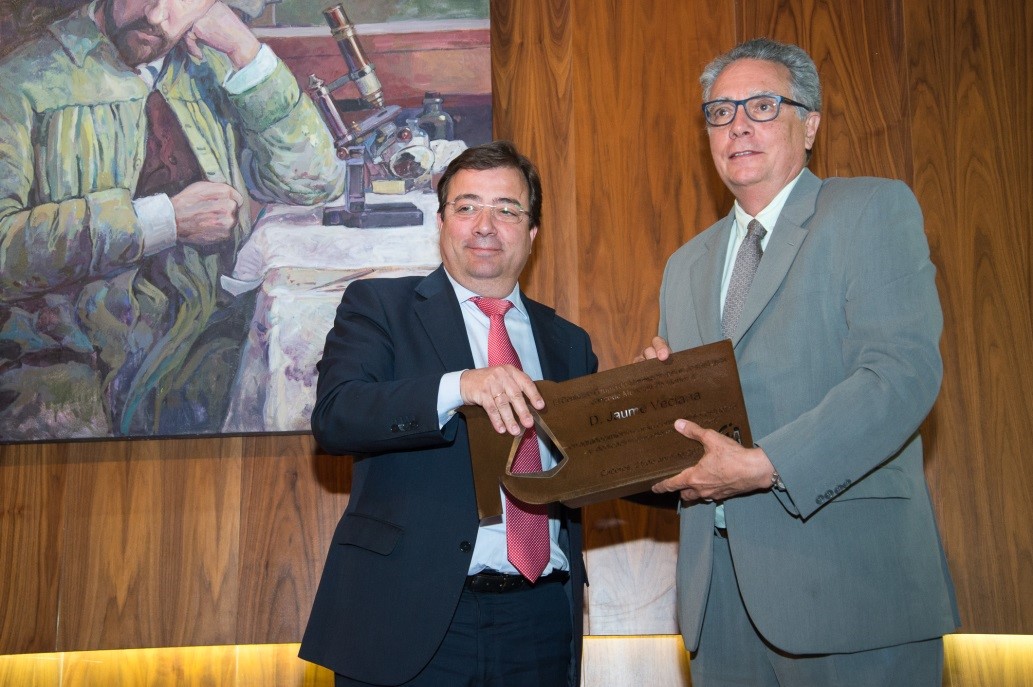
Jaume Veciana and Nora Ventosa, Scientific Directors of Unit 6 of NANBIOSIS together with other researchers from NANOMOL group, coordinator of Unit 6 of NANBIOSIS, has recently published an interesting review article in the journal Chemical Society Reviews.

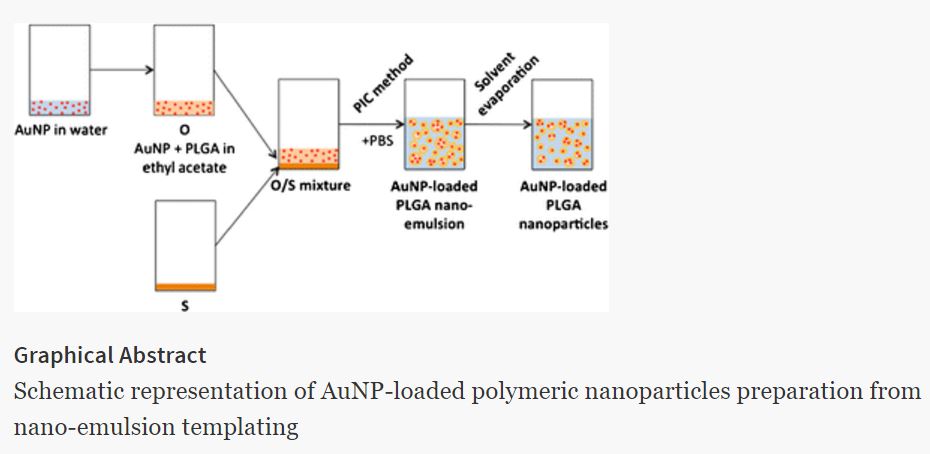
This review presents the large plethora of lipid-based nanovescicles available nowadays, focusing on a new generation of non-liposomal L-NVs and showing their similarities and differences with respect to their ancestors (liposomes). Since the overspread of a nanomaterial to the market is also strongly dependent on the availability of technological-scale preparation methods, it also extensively review the current approaches exploited for L-NV production. The most cutting-edge approaches for their preparation based on compressed fluid (CF) technologies is highlighted since they show the potential to represent a game-change in the production of L-NVs, favoring their step from the bench to the market. Finally, this review briefly discusses L-NV applications in nanomedicine looking also for their future perspectives.

Article of reference:  N.Grimaldi, F. da Silva, N.V. Segovia, L. Ferrer-Tasies, S. Sala, J. Veciana,* and N. Ventosa*, Chem. Soc. Rev., 2016, 45, 6520—6545

Lipid-based Nanovesicles for Nanomedicine
Read More

From Chromonic Self-Assembly to Hollow Carbon Nanofibers: Efficient Materials in Supercapacitor and Vapor-Sensing Applications

Conxita Solans, Scientific Director of the Unit 12 NANBIOSIS is co-author of the research article recently published a research article in the journal Applied Materials & Interfaces.

Carbon nanofibers (CNFs) with high surface area (820 m2/g) have been successfully prepared by a nanocasting approach using silica nanofibers obtained from chromonic liquid crystals as a template. CNFs with randomly oriented graphitic layers show outstanding electrochemical supercapacitance performance, exhibiting a specific capacitance of 327 F/g at a scan rate of 5 mV/s with a long life-cycling capability. Approximately 95% capacitance retention is observed after 1000 charge–discharge cycles. Furthermore, about 80% of capacitance is retained at higher scan rates (up to 500 mV/s) and current densities (from 1 to 10 A/g). The high capacitance of CNFs comes from their porous structure, high pore volume, and electrolyte-accessible high surface area. CNFs with ordered graphitic layers were also obtained upon heat treatment at high temperatures (>1500 °C). Although it is expected that these graphitic CNFs have increased electrical conductivity, in the present case, they exhibited lower capacitance values due to a loss in surface area during thermal treatment. High-surface-area CNFs can be used in sensing applications; in particular, they showed selective differential adsorption of volatile organic compounds such as pyridine and toluene. This behavior is attributed to the free diffusion of these volatile aromatic molecules into the pores of CNFs accompanied by interactions with sp2 carbon structures and other chemical groups on the surface of the fibers.

Article of reference: ACS Appl. Mater. Interfaces, 8 (45), 31231–31238, 2016

From Chromonic Self-Assembly to Hollow Carbon Nanofibers: Efficient Materials in Supercapacitor and Vapor-Sensing Applications
Read More

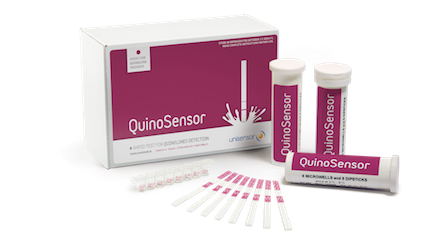
Unit 2 of NANBIOSIS participates in the FoodSmartPhone project of Marie Sklodowska Curie.

The Nb4D group of CSIC, coordinator of Unit 2 of NANBIOSIS led by Pilar Marco has joined the consortium for the FoodSmartPhone project funded by the Marie Sklodowska Curie Research Program. The Marie Sklodowska-Curie Actions (MSCA) support training in research and professional development aimed at innovation skills.

The objective of the project is to develop a smartphone-based diagnostic and detection tool for simplified quick pre-selection of food quality and safety parameters. This is because food safety and quality tests are currently inefficient, expensive and ineffective and can not guarantee food safety for all consumers or prevent possible incidents of food fraud.

FoodSmartPhone offers an opportunity for a doctorate that covers all aspects of smartphone-based detection tools, as well as a wealth of scientific knowledge as well as innovation and transfer.

The Nb4D group will act as leader of work package For more information 1 which aims to develop new concepts of ligand binding assay. The group will host two ESRs (Early Stage Researchers) and will also organize training events and an advanced PhD course for the production of haptens and bioreceptors.

For more information

Unit 2 of NANBIOSIS participates in the FoodSmartPhone project of Marie Sklodowska Curie.
Read More

The CIBER-BBN, partner of NANBIOSIS together with CCMIJU, incorporates two new research groups

The CIBER-BBN, partner of NANBIOSIS together with CCMIJU, has incorporated two new groups. One of them, led by José Miguel López-Higuera, is the Photonics Engineering Group of the University of Cantabria. The other is the Nanotechnology and Apoptosis Group of the Materials Science Institute of Aragon (CSIC-University of Zaragoza) led by Jesús Martínez de la Fuente. The incorporation of these groups has become official in the Governing Council of the CIBER celebrated on December, 1st

The CIBER-BBN currently has 47 research groups, selected on the basis of their scientific excellence, working mainly within three scientific programs: 1. Bioengineering and Medical Imaging, 2. Advanced Biomaterials and Therapies and 3. Nanomedicine. The activities of the center is oriented both to the development of prevention, diagnosis and monitoring systems and to the development of technologies related to specific therapies such as regenerative medicine and nanotherapies.

Jesús Martínez de la Fuente and the NAP group

The Group of Nanotechnology and Apoptosis (NAP) focuses its research on the development of general methodologies for the functionalization of nanoparticles and surfaces always looking for biotechnological applications.

Jesús Martínez de la Fuente is the author of about 150 articles in scientific journals of the highest level and inventor of 6 international patents, all licensed. He is an associate member of the Center for Cell Engineering of the University of Glasgow and of the Institute of Applied Sciences and Intelligent Systems of the Italian CNR in Naples and professor at the National Center for Translational Medicine (Shanghai Jiao Tong University, China). He is also co-founder and scientific advisor of the company NANOIMMUNOTECH S.L.

José Miguel López-Higuera and the Group of Photonic Engineering

The Photonics Engineering Group focuses its work on fiber optic sensor systems and instrumentation.
Prof. López-Higuera is a Fellow of the OSA, USA; Fellow of SPIE, USA, and member of the Royal Academy of Medicine of Cantabria. He is the Director of the International School of Light Sciences and Technologies that develops the fourth week of June of each year to the highest scientific and technological level in the world. He has made more than 600 academic and 17 industrial publications (patents). He has co-founded three technology-based companies.

The CIBER-BBN, partner of NANBIOSIS together with CCMIJU, incorporates two new research groups
Read More